Artificial Intelligence (AI) has become an essential tool in education, but how we use it determines whether it enhances or hinders learning. Many students treat AI as a content generator, expecting perfect answers without questioning their validity. However, AI should be seen as a knowledgeable classmate or teammate—a resource for brainstorming, discussion, and refinement, rather than a final authority.
AI-Generated Fake References: A Serious Issue
One of the biggest pitfalls of using AI in academic work is fabricated references. Many students rely on AI to generate sources for research papers, only to realize later that the citations do not exist.
A Reddit user discovered that ChatGPT fabricated an academic reference. The reference was presented convincingly but did not exist in any academic journal. This problem is well-documented: AI sometimes creates plausible-looking but completely fake journal articles, misleading students into accidental academic dishonesty.
Why does AI generate fake references?
- AI models like ChatGPT do not retrieve real-world data; instead, they predict text based on probability.
- AI lacks direct access to academic databases like Google Scholar, PubMed, or IEEE Xplore.
- It may combine elements from multiple real references into one non-existent source.
Consequence: Students who submit AI-generated references risk being accused of academic misconduct—some have even faced expulsion for submitting fake citations.
Further Reading: Detecting ChatGPT: A Survey of the State of Detecting ChatGPT-Generated Text discusses why AI-generated content is unreliable and how universities are working to detect it.
How to Use AI Correctly: A Practical Guide
1. Treat AI as a Knowledgeable Student, Not a Generator
Think of AI as a study partner—it can offer ideas, clarify concepts, and summarize research, but it should never be used as a blind authority. Just like you would not accept everything a classmate says without verification, you should not blindly trust AI-generated content.
Better Approach:
- Ask AI open-ended questions instead of direct answers.
- Use AI for brainstorming, structuring essays, or summarizing complex papers.
- Debate AI’s responses—question whether its output makes logical sense. However, when you do this, you will notice something interesting. Whenever you challenge AI, it will often immediately admit that it was wrong and provide the opposite answer, even when its original response was actually correct. This highlights how easily AI can produce unreliable answers.
2. Avoid Fake References: Fact-Checking AI’s Work
Since AI hallucinates references, here is how you can ensure your citations are real:
Method 1: Manual Cross-Checking with Academic Search Engines
- Use Google Scholar or academic search engines (JSTOR, PubMed, IEEE Xplore) to search for your topic.
- Find relevant papers and list down their titles.
- Ask AI to summarize real papers, not generate its own references.
- Double-check AI’s summaries with the original abstracts.
Method 2: Using AI Research-Specific Tools
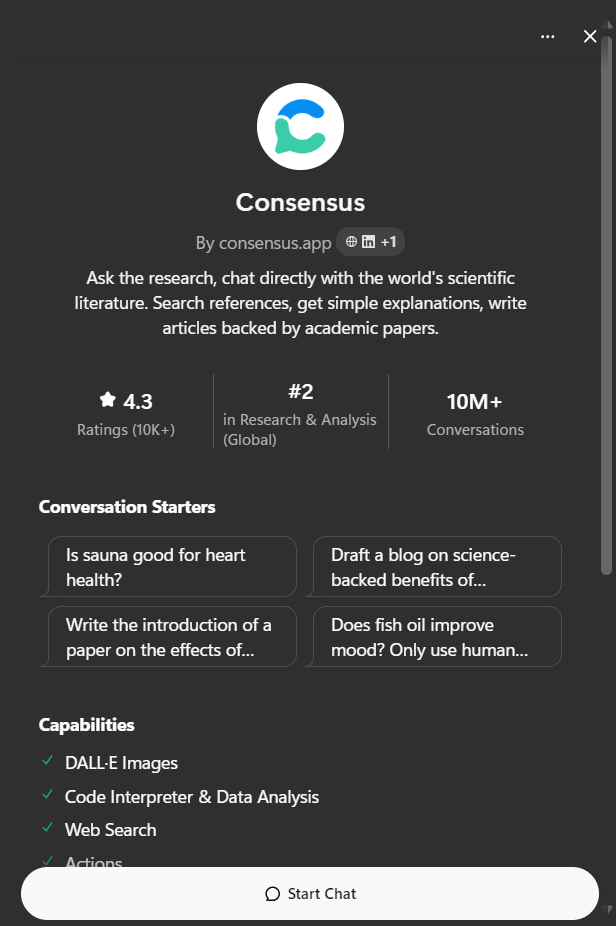
- Consensus AI: A trained research AI model that retrieves real studies instead of generating fake ones.
- Elicit.org: Helps students find peer-reviewed papers and credible sources.
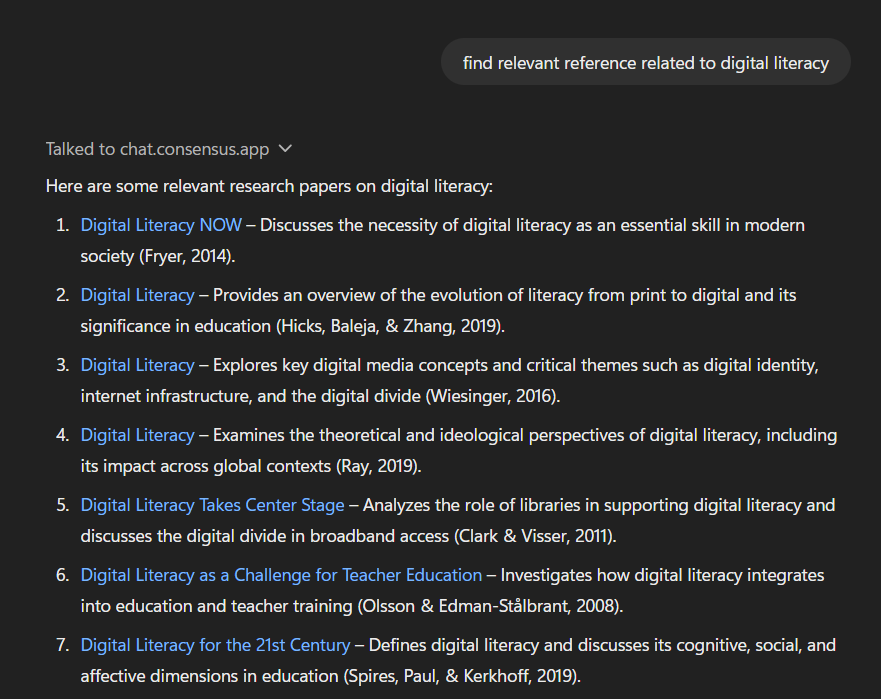
Warning: Even with these tools, always verify the references before using them in academic work.
Universities Should Teach AI Literacy
Students are not solely responsible for AI misuse, universities must step up to teach AI literacy and set clear guidelines. Instead of banning AI tools outright, schools should:
Educate students on responsible AI use
- Offer workshops on how to verify AI-generated information.
- Teach proper AI citation methods to avoid plagiarism concerns.
Set AI usage policies in assignments
- Clearly state what level of AI assistance is allowed in assignments.
Encourage AI as a learning assistant, not a shortcut
- Promote high-level discussions with AI, similar to discussions with classmates.
- Train students to critically analyze AI-generated responses instead of accepting them at face value.
AI is not a replacement for human thinking, it is a tool that can enhance learning if used correctly. The key is to engage with AI critically, verify its information, and use it as a supplement rather than a substitute.
Sorry, but comments are not enabled on this site.