Discussions on artificial intelligence (AI) and its environmental impact often emphasize the high energy consumption of data centers, electronic waste, and carbon emissions. While AI undoubtedly requires significant resources, it is worth questioning whether it is truly one of the biggest environmental concerns we should focus on.
Technological progress has always come with an environmental cost—there is no such thing as advancement with zero impact. However, the key issue is how AI compares to other major environmental threats and whether it can ultimately become a tool for sustainability rather than just a burden on the planet.
The Environmental Cost of AI: Reality vs. Exaggeration
The United Nations Environment Programme (UNEP) has highlighted several ways in which AI-related infrastructure affects the environment:
- Energy consumption: AI training and data processing require significant computing power, leading to high electricity use in data centers.
- Electronic waste: The rapid replacement of AI hardware results in large amounts of e-waste, containing hazardous materials like lead and mercury.
- Water consumption: Cooling AI servers consumes an enormous amount of water—globally, AI-related infrastructure may soon use six times more water than the entire country of Denmark.
- Carbon emissions: AI’s energy demands still largely depend on fossil fuels, contributing to greenhouse gas emissions. A single request to ChatGPT uses ten times the electricity of a standard Google search.
While these concerns are valid, AI is not purely an environmental burden. In fact, it can help optimize energy usage and combat climate change in the long run:
- AI optimizes power grid management, reducing energy waste and improving renewable energy efficiency.
- AI enhances transportation and logistics, minimizing unnecessary emissions.
- AI analyzes climate data to help governments develop more effective carbon reduction policies.
In other words, AI is not just part of the proble, it is also part of the solution.
A More Significant Problem: The Carbon Footprint of the Wealthy
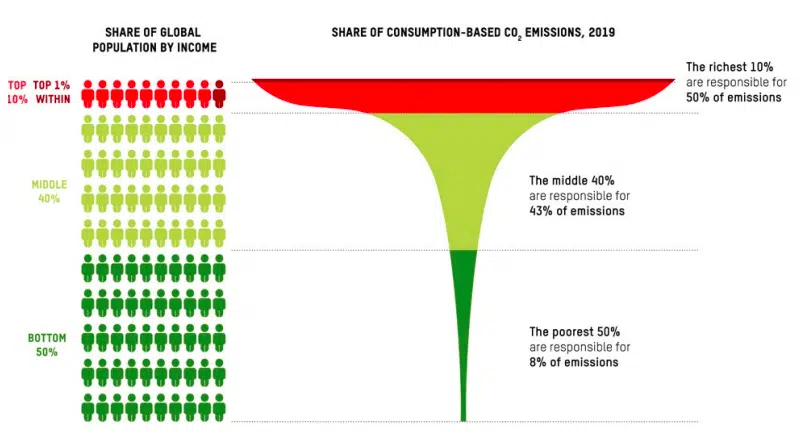
Compared to AI’s energy consumption, the carbon footprint of the world’s wealthiest individuals and their unsustainable consumption habits may be a far greater environmental threat. According to The Wealth Factor: The Role of Rich People in Climate Change, the richest 10% of the world’s population is responsible for 50% of all carbon emissions.
In the United States alone, the richest 10%—those earning an average of $233,600 per year—emit an astonishing 56.5 tons of CO₂ per person annually, compared to the average American’s 14.4 tons per year. This extreme disparity is also evident globally, where the wealthiest 1% generate double the carbon emissions of the poorest 50%.
Why Do the Wealthy Have a Disproportionate Impact on the Environment?
- Luxury Lifestyles
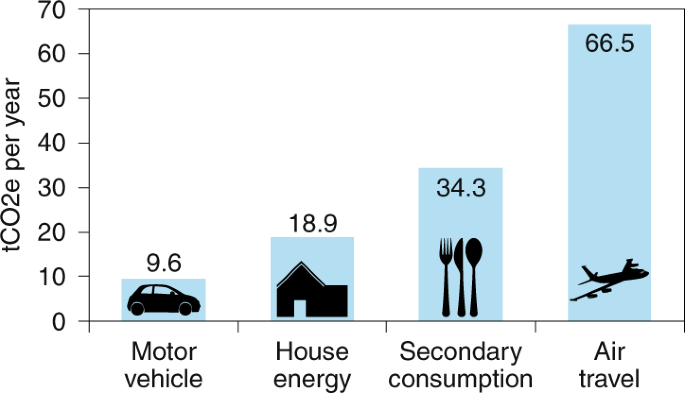
- Private jets emit three to six times more CO₂ per passenger than commercial economy flights.
- Large mansions require excessive heating, cooling, and energy consumption.
- High-end imported goods (luxury cars, designer fashion, yachts) contribute significantly to carbon emissions.
- Investment and Industrial Influence
- The wealthiest individuals often invest in carbon-intensive industries such as fossil fuels, manufacturing, and large-scale construction.
- Many corporations prioritize profit over sustainability, further worsening environmental damage.
- Policy Influence
- The wealthy have greater political influence, which often leads to the blocking or delaying of strict environmental regulations.
While AI’s energy demands are significant, the excessive consumption habits of the wealthy and their disproportionate environmental footprint present a far more pressing issue.
Debunking the Concern About AI and Transportation
One of the concerns raised in discussions about AI’s environmental impact is that self-driving cars could lead to an increase in personal vehicle use, reducing reliance on bicycles or public transportation and thus increasing emissions.
However, this concern misses the bigger picture. If implemented correctly, AI-driven transportation can significantly reduce urban carbon emissions and create a more efficient, sustainable public transit system.
Potential AI-driven solutions for greener transportation:
- AI-powered electric streetcars: AI could manage autonomous public transit networks, similar to subway systems but on the surface, reducing the need for personal vehicles.
- Optimized traffic flow: AI-driven city planning could eliminate congestion, reducing unnecessary idling and emissions.
- Reduced accidents and energy-efficient driving: AI can ensure safer, more energy-efficient driving patterns, further lowering overall emissions.
With proper urban planning and policy integration, AI transportation has the potential to replace high-emission transit models rather than worsen them.
Balancing Technological Progress and Environmental Responsibility
If AI does contribute to environmental concerns, does that mean we should halt technological progress? The answer is no. Instead of resisting innovation, we should focus on developing AI responsibly and regulating its energy consumption.
Potential Solutions to Mitigate AI’s Environmental Impact
- Improving AI energy efficiency:
- Optimizing algorithms to reduce computational power requirements.
- Using renewable energy for AI model training and operations.
- Implementing smarter cooling technologies to minimize water waste.
- Raising public awareness and policy reform:
- Educate the public on which industries and demographics are the primary contributors to carbon emissions, preventing AI from becoming a scapegoat for environmental issues.
- Promote the integration of technology and environmental protection, such as using AI to predict extreme weather events and optimize urban energy usage, achieving a win-win situation.
Technological advancement itself is not the problem, the real issue lies in how we choose to use it. Rather than excessively worrying about AI’s energy consumption, we should focus more on how to reduce the high carbon emissions of the wealthy and how governments can implement more effective and sustainable policies.
It is not enough to simply say, “Protecting the environment is everyone’s responsibility.” Those who contribute more to pollution should bear a greater share of the responsibility.
Sorry, but comments are not enabled on this site.